LED Ceiling Recessed Spotlights Explained: Benefits, Types, and Installation Tips

Engineered for Energy Efficiency, Dynamic Beam Control, and High-ROI Commercial Projects
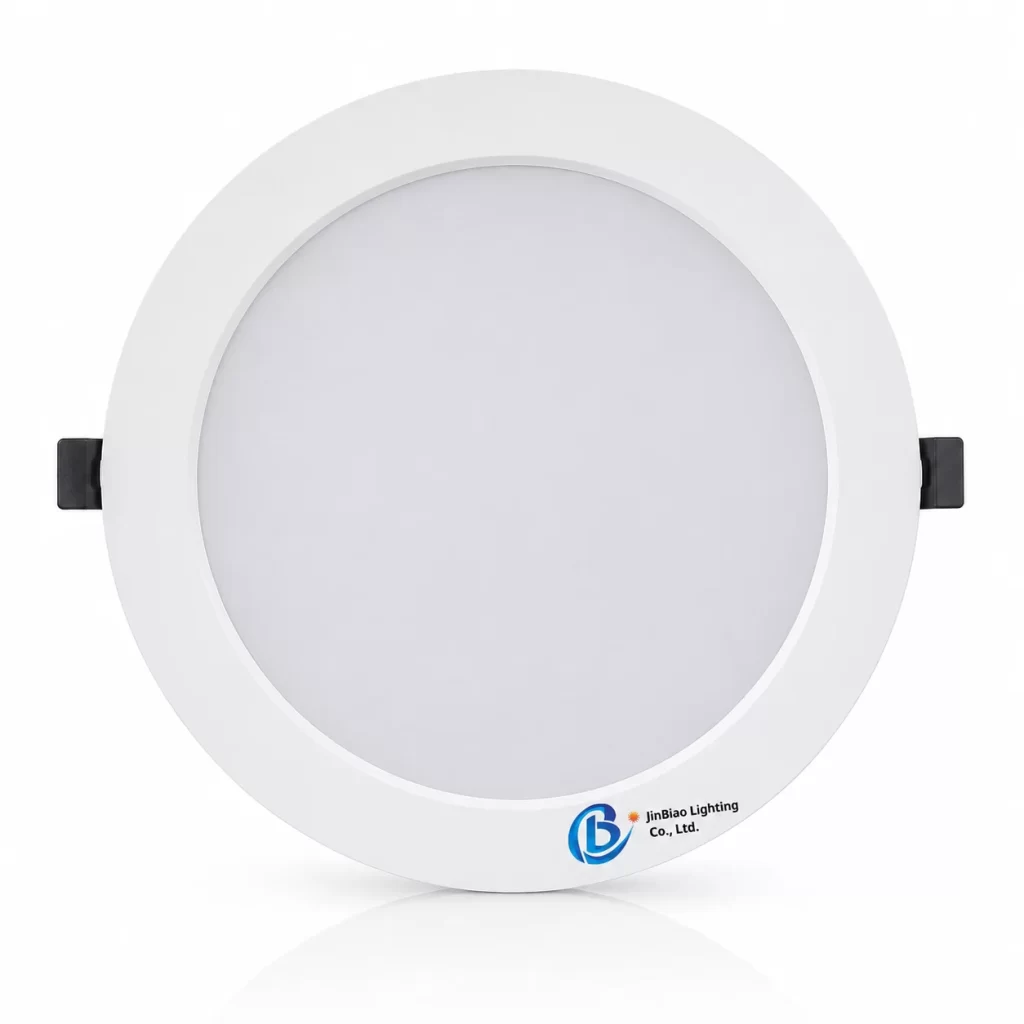
An LED Recessed Spotlight is one of the most versatile, high-efficiency illumination fixtures available for modern architectural, commercial, and residential ceiling retrofits. Delivering focused directional lighting while sitting flush within ceiling cavities, these fixtures eliminate visual clutter while transforming interior aesthetics. Whether highlighting museum artwork, illuminating retail displays, or providing zero-glare task lighting over office work surfaces, choosing specification-grade fixtures ensures decades of maintenance-free performance.
As a government-supported manufacturing enterprise with 16 years of engineering mastery, Jinbiao Lighting produces precision-engineered LED Recessed Spotlight solutions built with high-density ADC12 die-cast aluminum heat sinks, isolated flicker-free drivers, and certified IC-Rated insulation contact safety under UL 1598 standards. This technical guide explores fixture selection, beam mechanics, photobiological comfort, and professional installation parameters to optimize your commercial lighting investment.
Key Performance Advantages: Why Upgrade to LED Technology?
- Up to 85% Energy Reduction & Direct Cost Savings: Consuming at least 75% less electricity than legacy incandescent or halogen bulbs, an LED Recessed Spotlight converts over 90% of electrical energy directly into usable lumens rather than wasted thermal dissipation. Replacing traditional 60W halogen lamps with high-efficiency 10W LED engines slashes operating costs while significantly reducing commercial HVAC cooling loads.
- 50,000-Hour Lifespan & Zero Maintenance: High-quality solid-state luminaires deliver an operational lifespan between 30,000 and 50,000 hours—equivalent to 20 to 45 years of standard daily operation. Unlike incandescent filaments that fail abruptly, quality LEDs experience gradual lumen depreciation (L70), drastically cutting ladder time and maintenance costs in high-ceiling installations.
- Space-Saving Architecture & Clean Aesthetics: Designed to install seamlessly inside ceiling junction boxes or drywall cutouts, recessed fixtures preserve vertical headroom. This flush architecture is ideal for low-ceiling hospitality suites, luxury residential corridors, and modern retail environments where bulky hanging fixtures create visual obstruction.
Understanding the Mechanics: Fixed vs. Adjustable Recessed Spotlights
Selecting the correct LED Recessed Spotlight configuration depends on room geometry, ceiling heights, and lighting application intent:
| Feature Parameter | Fixed Recessed Spotlight | Adjustable / Gimbal Recessed Spotlight |
| Beam Directionality | Fixed downward directional vector (38°–60°) | 360° rotation with 20°–40° vertical tilt mechanism |
| Primary Application | General ambient illumination & uniform grid lighting | Accent lighting, artwork highlighting & wall washing |
| Optic Engineering | Diffused reflector cone or wide secondary lens | Precision optical lens with adjustable narrow optics |
| Ideal Environments | Hallways, office grids, general retail aisles | Galleries, luxury hotel lobbies, angled ceilings |
Advanced Safety & Optical Features
- IC-Rated (Insulation Contact) & Airtight Safety: In modern insulated ceiling cavities, non-IC fixtures pose severe fire hazards if thermal cutoff mechanisms fail. Jinbiao’s IC-Rated housings feature thermal isolation barriers, permitting direct contact with spray foam or fiberglass insulation. Airtight seals prevent conditioned indoor air from leaking into unconditioned attic spaces, fully compliant with IECC energy efficiency codes.
- UGR < 19 Deep Anti-Glare Optics & RG0 Eye Safety: Visual fatigue and migraines in office or classroom settings are frequently caused by harsh direct glare and stroboscopic ripple. Our fixtures feature deep-set optical reflectors achieving UGR < 19, paired with drivers built under IEEE 1789 flicker-mitigation guidelines. Tested under IEC 62471 photobiological standards, our light engines emit zero harmful short-wave blue spikes (RG0 Exempt Group).
- Full-Spectrum Color Fidelity (CRI > 97) & 3CCT Flexibility: To recreate natural daylight, our chip arrays achieve a Color Rendering Index (CRI > 97 with R9 > 50 for deep red rendering). Featuring integrated 3CCT selector switches, installers can toggle between 3000K (Warm White), 4000K (Natural White), and 6000K (Cool White) on-site—reducing distributor SKU holding costs while matching client preference.
Professional Spacing, Layout & Installation Guidelines
Achieving uniform, shadow-free illumination requires adherence to proven architectural spacing rules:
- The Half-Height Spacing Rule: Space fixtures at a distance equal to half the ceiling height. For an 8-foot ceiling, space spotlights 4 feet apart; for a 10-foot ceiling, maintain 5-foot spacing to create overlapping light cones that eliminate dark spots.
- Wall Perimeter Clearance: Position the perimeter row of spotlights at half the inter-fixture distance from walls (e.g., 2 feet from the wall for 4-foot fixture spacing). Over kitchen countertops, position fixtures 18 to 24 inches from the back wall directly over task work surfaces.
- Beam Angle Selection:
- Spot (10° – 30°): High-intensity accent lighting for sculptures, artwork, and architectural columns.
- Medium (30° – 60°): Focused task lighting over kitchen islands, desks, and retail counters.
- Wide (60° – 120°): Diffused ambient lighting for living rooms, open-plan offices, and general corridors.
Technical Specifications Overview
| Parameter | Professional Specification | Engineering Standard / Application |
| Model Series | JB-RSL LED Recessed Spotlight Series | Specification-Grade Architectural & Commercial |
| Wattage Options | 5W / 9W / 12W / 18W / 25W | High-efficiency ADC12 die-cast thermal body |
| Safety Rating | IC-Rated & Airtight Seal Certified | Direct thermal insulation contact approved |
| Anti-Glare Index | UGR < 19 Deep Cut-Off Optics | Compliant with CIE 117 glare restrictions |
| Color Rendering | CRI > 97 / Ra > 95 (R9 > 50) | Full-spectrum natural color fidelity |
| Color Temperature | 3CCT Switchable (3000K / 4000K / 6000K) | On-site optical temperature adaptability |
| Dimming Protocols | TRIAC Phase-Cut / 0-10V / DALI-2 / Smart Tuya | Smooth 1%–100% flicker-free dimming curves |
| Lifespan Rating | L70 > 50,000 Hours @ 55°C | Tested under IES LM-80 / TM-21 standards |
| Certifications | CE Marking, RoHS Compliance, FCC, ETL, ISO 9001:2015 | Certified for global building & electrical codes |
Why Partner with Jinbiao Lighting? Factory Direct B2B Advantages
As an established manufacturer, Jinbiao Lighting delivers strategic commercial support to international distributors, lighting designers, and engineering contractors:
- Factory-Direct Pricing & High Profit Margins: By eliminating trading intermediaries and operating automated SMT assembly lines, we provide premium architectural spotlights at highly competitive direct-factory pricing.
- Exclusive Regional Protection & Zero Franchise Fees: We protect our global partner networks by granting exclusive regional sales rights, preventing price wars and unauthorized channel leakage without demanding initial franchising fees.
- SKD Tariff-Reduction & OEM Customization: For international brands with local assembly lines across Latin America, Africa, and Southeast Asia, we supply fully tested, pre-programmed PCBA modules in SKD (Semi-Knocked Down) format to minimize import tariffs and shipping volumes.
- Complete Engineering Support: Our technical department provides complimentary DIALux photometric layouts, custom wiring schematics, and white-label branding within 24 hours. For heavy industrial environments, explore our engineered Industrial High Bay Series.
100% Quality Assurance & Factory Protocol
Every single LED Recessed Spotlight manufactured in our facility undergoes a strict 3-stage QA protocol prior to shipment:
- 48-Hour Thermal Aging Test: Continuous full-load burn-in at elevated ambient temperatures to ensure junction temperature stability and driver reliability.
- Integrating Sphere Optical Calibration: 100% spectroradiometer verification confirming CRI > 97 ratings, RG0 blue light elimination, and precise CCT output.
- High-Voltage Dielectric & Isolation Test: Dielectric withstand testing to ensure full compliance with international safety and surge resistance standards.
The Jinbiao Guarantee: Backed by 16 years of manufacturing integrity, we support our commercial spotlight series with an unconditional 5-Year Solid Warranty. Contact our international engineering team today to request free sample units, DIALux photometric reports, and direct factory export quotations.
Technical Reviewer & Product Specialist
Written & Technically Verified by:
Abel Tian
International Business Specialist & LED Industrial Lighting Solutions Director
Shanxi Jinbiao Lighting Co., Ltd.
With extensive expertise in cross-border industrial supply chains, OEM/ODM manufacturing, and commercial illumination engineering, Abel specializes in providing specification-grade LED lighting controls and fixture systems for global contractors, distributors, and infrastructure projects.
🔗 Connect with Abel Tian on LinkedIn | Let’s discuss factory-direct pricing, custom SKD tariff-reduction strategies, and exclusive regional partnership terms for your market.
References & Regulatory Standards Citations
Directive 2011/65/EU (RoHS 2) & Directive 2014/30/EU (EMC) – Restriction of Hazardous Substances & Electromagnetic Compatibility Directive for recessed luminaires. European Parliament and of the Council.
UL 1598 / CSA C22.2 No. 250.0 – Luminaires – Standard for Recessed Architectural & IC-Rated Ceiling Installation. Underwriters Laboratories.
IEC 62471:2006 – Photobiological safety of lamps and lamp systems (RG0 Exempt Group classification). International Electrotechnical Commission.
IEEE Std 1789-2015 – IEEE Recommended Practices for Modulating Current in High-Brightness LEDs for Mitigating Health Risks to Viewers. Institute of Electrical and Electronics Engineers.
CIE 117-1995 – Discomfort Glare in Interior Lighting (Unified Glare Rating – UGR < 19 Criteria). International Commission on Illumination.
IES LM-80-15 / TM-21-11 – Measuring Lumen Maintenance of LED Light Sources & Projecting Long-Term Lumen Maintenance. Illuminating Engineering Society.