
Dimmable vs Non-Dimmable LED Lights: What Buyers Need to Know

When selecting LED lighting, buyers need to consider more than brightness and energy efficiency. Dimmable vs non-dimmable LED lights is another important decision, especially for commercial projects that require flexible lighting control.
Although both options provide reliable illumination, they serve different needs. Understanding their differences helps buyers select suitable products and avoid compatibility problems during installation.
What Are Dimmable LED Lights?
Dimmable LED lights allow users to adjust brightness according to different activities, times, or environmental conditions.
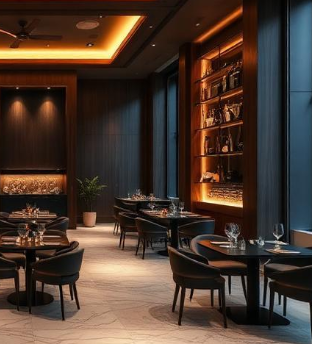
For example, a restaurant may need brighter lighting during cleaning and softer lighting during dinner. Similarly, a hotel may use adjustable lighting to create different atmospheres in guest rooms and public areas.
Common applications include:
- Hotels and restaurants
- Conference rooms
- Retail stores and showrooms
- Residential interiors
- Hospitality and entertainment spaces
However, dimming performance depends on compatibility between the LED light, driver, dimmer, and control system. Buyers should confirm these details before placing an order.
What Are Non-Dimmable LED Lights?
Non-dimmable LED lights operate at a fixed brightness under normal conditions. They are suitable for applications where users do not need to adjust light output regularly.
Because these products do not require a dimming function, they can be a practical choice for projects that prioritize straightforward operation and budget control.
Typical applications include:
- Warehouses
- Corridors and stairwells
- Storage areas
- Parking facilities
- Utility rooms
- General-purpose lighting
For these environments, fixed-output lighting may provide everything the project needs without adding unnecessary control features.
Dimmable vs Non-Dimmable LED Lights: Key Differences
| Feature | Dimmable LED Lights | Non-Dimmable LED Lights |
|---|---|---|
| Brightness adjustment | Supported with compatible controls | Not supported |
| Lighting flexibility | Higher | Basic |
| Control system | Requires compatible dimming equipment | Usually simpler |
| Initial system cost | May be higher | Often more economical |
| Typical applications | Hotels, restaurants, showrooms | Warehouses, corridors, storage areas |
Actual costs depend on the product, driver, dimmer, and installation requirements. Therefore, buyers should compare the complete lighting system rather than the fixture price alone.
How to Choose the Right Option
Start by identifying how the space will be used.
Choose dimmable LED lights when brightness needs to change throughout the day or between different activities. They are especially useful in hospitality, retail, and other spaces where lighting atmosphere matters.
Choose non-dimmable LED lights when a consistent light output is sufficient. They can help simplify specifications and control costs in warehouses, storage areas, and general lighting projects.
In addition, consider future operating requirements. If the project may need lighting automation or scene control later, confirm whether the proposed fixtures support the intended control system.
Check Compatibility Before Purchasing
One of the most important considerations is dimming compatibility. Not every LED light works with every dimmer, even when both products support dimming.
Before confirming an order, B2B buyers should check:
- Dimming method: Confirm whether the system uses TRIAC, 0–10V, DALI, or another method.
- Driver compatibility: Ensure the LED driver supports the selected dimming method.
- Dimmer specifications: Check the dimmer’s load range and compatibility with the fixture.
- Minimum brightness: Confirm the required dimming range and whether flicker or unwanted noise may occur.
- Input voltage: Make sure the product matches the project’s electrical supply.
These checks can reduce installation problems and help ensure the lighting system performs as expected.
What Should B2B Buyers Compare?
Dimming is only one part of a lighting specification. Buyers should also compare luminous output, efficiency, color temperature, CRI, beam angle, and IP rating where relevant.
For example, a showroom may need both high color rendering and adjustable brightness. In contrast, a warehouse may prioritize suitable light output, efficiency, and reliable operation.
By matching the specifications to the application, buyers can avoid paying for unnecessary features while still meeting project requirements.
Final Thoughts
The main difference between dimmable and non-dimmable LED lights is brightness control. Dimmable products offer greater flexibility, while non-dimmable options provide straightforward lighting for applications that need a consistent output.
Before purchasing, confirm the project’s control requirements and check compatibility between the fixture, driver, and dimmer. This simple step helps B2B buyers select a suitable solution and reduce potential installation issues.