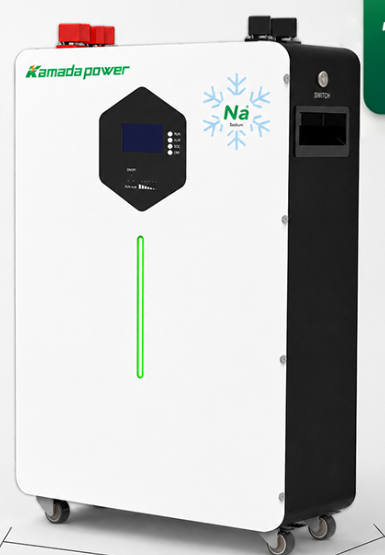
48V 51.2V Home Energy Storage Battery for Solar Systems

PRODUCT PARAMETERS
Description
FAQs
Request A Quote
Description
A 48V 51.2V Home Energy Storage Battery helps homeowners and solar system installers store electrical energy for later use. By matching battery capacity with household electricity demand and solar generation, buyers can plan an energy storage system that fits their actual requirements. For distributors, installers, and energy solution providers, the key is to select a battery with the right voltage, usable energy, inverter compatibility, and installation configuration.
Jinbiao Lighting supports customers exploring energy storage products for solar applications and related lighting projects. The product range featured in this article includes 8.2kWh, 9kWh, and 10kWh capacity options, with 48V and 51V-class voltage specifications indicated in the product listing. Before placing an order, buyers should confirm the exact rated voltage and all technical details for the selected model.
What Is a 48V 51.2V Home Energy Storage Battery?
A home energy storage battery stores electricity for use when solar generation falls or household demand increases. For example, a solar installation can charge the battery during periods of surplus generation, while a compatible inverter manages the flow of electricity between the solar panels, battery, household loads, and grid where applicable.
A 48V-class battery system is a common option in residential and small-scale energy storage applications. However, nominal voltage alone does not determine whether a battery suits a particular project. Buyers must also consider battery chemistry, rated energy, charge and discharge limits, communication protocols, and inverter compatibility.
Although product listings sometimes group 48V and 51.2V batteries together, these values should not be treated as interchangeable specifications. Therefore, always confirm the exact nominal voltage and operating voltage range before selecting an inverter or placing an order.
Compare 8.2kWh, 9kWh, and 10kWh Battery Options
Battery capacity directly affects how much energy a system can store. Nevertheless, the most suitable capacity depends on the customer’s electricity consumption, required backup duration, solar generation, and budget.
8.2kWh Home Energy Storage Battery
An 8.2kWh battery may suit a household or small energy project with a moderate storage requirement. To evaluate this option, estimate the daily energy consumption of the appliances that the system needs to support.
In addition, check the battery’s usable energy and continuous discharge rating. These specifications determine how much electricity the system can actually deliver to connected loads.
9kWh Home Energy Storage Battery
A 9kWh battery offers a different storage capacity for buyers comparing residential solar solutions. It may be worth considering when the estimated energy requirement falls between the available options.
However, a larger nominal capacity does not automatically guarantee longer backup time under every operating condition. Actual performance depends on usable energy, conversion losses, discharge limits, and the total power demand of connected appliances.
10kWh Home Energy Storage Battery
A 10kWh battery can support projects that require more stored energy than a smaller-capacity option provides, subject to the battery’s usable capacity and discharge limits.
For example, buyers may evaluate this capacity for household solar installations or other compatible energy storage applications. Before choosing it, compare the expected daily load, the required backup period, the available charging energy, and the system’s discharge power.
Important: The capacities above describe the options named in the product listing. They do not establish the usable energy, continuous output, or backup duration of every model. Request the corresponding datasheet before making a final selection.
How to Choose the Right Battery Capacity
Choosing a home energy storage battery starts with an assessment of electricity consumption rather than a guess based on household size.
First, identify the appliances that need backup power and record their energy consumption. Next, estimate how long those appliances must operate during a power interruption or a period without sufficient solar generation.
Then, account for the battery’s usable energy and the energy conversion losses in the system. For example, if the connected appliances consume 1kWh per hour in total, a nominal 10kWh battery will not necessarily supply those appliances for ten hours. The actual duration depends on usable capacity, inverter efficiency, battery operating limits, and the load profile.
Finally, check the battery’s continuous discharge power and peak discharge capability. A battery may store sufficient energy for a project but still fail to support appliances whose starting or operating power exceeds its limits.
Solar Energy Storage Applications
Residential Solar Systems
Homeowners can combine solar panels, a compatible inverter, and an energy storage battery to manage electricity generated on-site. During periods of sufficient solar production, the system may charge the battery according to its control settings and available charging power.
Later, the stored energy can supply compatible household loads when solar production decreases. However, grid-connected operation, backup functionality, and energy export depend on the inverter, electrical installation, local regulations, and system configuration.
Off-Grid Energy Systems
Off-grid systems rely on local generation and energy storage rather than a continuous utility grid connection. In these installations, battery capacity and power ratings play an important role in maintaining a suitable balance between electricity supply and demand.
Therefore, installers should calculate the expected daily load, account for seasonal changes in solar production, and confirm whether the system can support periods of low generation. They should also consider any backup generator or alternative power source required by the project.
Small Commercial Energy Storage
Small commercial sites may use solar energy storage to support selected electrical loads or manage energy use. Nevertheless, commercial requirements vary considerably according to equipment, operating hours, and power demand.
Before specifying a residential-class battery for a commercial application, confirm its rated power, permitted installation environment, applicable safety requirements, and suitability for the intended duty cycle.
Solar Lighting and Outdoor Projects
Energy storage can also support solar lighting installations when the battery voltage, capacity, charge controller, and system design match the lighting equipment. For example, project planners may evaluate storage requirements for outdoor lighting systems that need to operate after sunset.
However, the battery must suit the specific lighting system. Buyers should calculate the combined power consumption of the lights, required operating hours, charging conditions, and expected periods of limited sunlight before selecting a storage capacity.
Check Battery and Inverter Compatibility
Battery and inverter compatibility is essential for a safe and functional energy storage installation. Even when two products have similar voltage ratings, their electrical limits and communication requirements may differ.
Before purchasing a battery, verify the following details:
- Voltage range: Confirm that the battery’s operating voltage falls within the inverter’s permitted battery voltage range.
- Charge and discharge current: Check that the inverter’s current limits match the battery’s specifications.
- Communication protocol: Confirm whether the products support the required CAN, RS485, or other communication interface.
- Battery management system: Review the BMS protection functions and communication requirements specified by the manufacturer.
- Operating conditions: Verify the permitted charging and discharging temperatures and the installation environment.
- System configuration: Confirm whether the inverter supports the proposed battery model and the intended system arrangement.
Where possible, obtain written compatibility confirmation from the battery or inverter manufacturer. This step helps reduce integration problems during installation and commissioning.
What Should Buyers Check Before Ordering?
For importers, distributors, and solar installers, an accurate quotation requires clear technical and commercial information.
1. Battery chemistry and cell specifications. Confirm whether the selected model uses LiFePO4, another lithium-ion chemistry, or a different battery technology. Do not assume the chemistry from the voltage or capacity alone.
2. Rated and usable energy. Request the rated energy in kWh and the manufacturer’s stated usable energy under the specified operating conditions.
3. Output capability. Check continuous discharge current, maximum discharge current, and any applicable power limits. These values determine which loads the battery can support.
4. Safety and protection. Request details of the battery management system, overcurrent protection, temperature protection, and other documented safety functions.
5. Certifications and documentation. Ask for the test reports and certifications applicable to the exact model and destination market. Verify that the documents cover the product being purchased.
6. Dimensions and installation. Confirm the product dimensions, weight, mounting arrangement, wiring access, and required installation clearances.
7. Warranty and after-sales support. Review the written warranty, exclusions, troubleshooting procedures, and availability of technical assistance before confirming an order.
These checks provide a more reliable basis for comparing suppliers than headline capacity or advertised features alone.
Why Choose a Supplier for Energy Storage Products?
For distributors and project buyers, a suitable supplier should provide more than a product listing. Accurate specifications, responsive communication, technical documentation, and clear order arrangements also matter.
Jinbiao Lighting works with customers seeking lighting products and related energy storage solutions. For each project, buyers should communicate their target market, intended application, required capacity, and system integration needs so the product selection can be evaluated against the actual requirements.
For OEM/ODM or customized sourcing discussions, clarify the available customization scope before assuming that a specific voltage, battery chemistry, enclosure, communication function, or certification can be changed.
A clear technical review helps both parties establish the basis for product selection, quotation, and order confirmation.
Request a Quote for a Home Energy Storage Battery
Are you sourcing 48V or 51.2V home energy storage batteries for solar installations, distribution, or customized energy projects?
Contact Jinbiao Lighting with your required capacity, target market, intended application, inverter model, and estimated order quantity. If you already have a technical specification or system diagram, include it with your inquiry.
Our team can review your requirements and discuss available product options, technical documentation, and quotation details.
Contact Jinbiao Lighting to request product information and a quotation for your energy storage project.
FAQs
How do you ensure the heat resistance of your decorative lights?
For products like our Acrylic Flower series, we use UV-stabilized, high-grade acrylic and professional-grade LED chips with low thermal resistance. Our in-house SMT technology ensures stable current flow, preventing overheating and ensuring the material won't yellow or deform over time.
Do your solar products work in low-sunlight areas?
Our solar street lights feature high-efficiency monocrystalline panels and Intelligent Power Management (IPM), allowing them to remain functional for 3-5 rainy days.
What is the lead time for customized orders?
Standard products are usually in stock. For customized OEM orders (like specific PCBA designs), our lead time is typically 15-25 days, thanks to our fully automated production lines in Guangdong and Shanxi.
How do you handle shipping costs for 40ft containers?
We work with top-tier freight forwarders to lock in competitive rates. We provide a detailed Loading Plan to maximize container space (CBM optimization), saving you 5-10% on sea freight costs.
Is it possible to visit your factory virtually?
Absolutely. We offer Live Video Tours via WhatsApp or Zoom. You can see our SMT lines, die-casting centers, and aging test rooms in real-time to verify our scale and quality.
How do you handle warranty claims for international orders?
We operate on a "Replacement First" policy. If a product fails within the warranty period, we ship replacement parts or new units with your next shipment, or provide a credit note immediately—no need to ship bulky items back to China.