
How to Choose the Right LED Downlight for Commercial Projects?

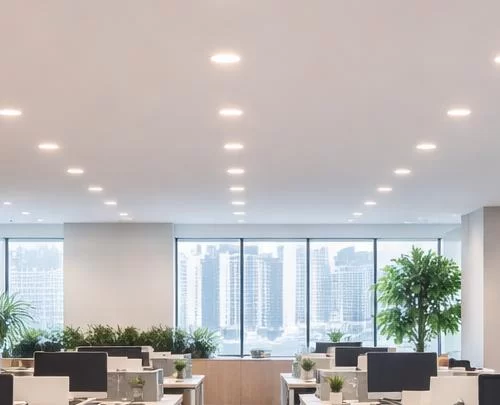
How to choose the right LED downlight for commercial projects? This is an important question for contractors, lighting designers, distributors, and project buyers.
Commercial spaces need more than bright light. They need the right brightness, beam angle, color temperature, CRI, and glare control.
The right LED downlight can improve visual comfort, reduce energy use, and create a better space. In this guide, we will cover the key factors to consider before choosing commercial LED downlights.
Why Is the Right LED Downlight Important?
Commercial lighting is often used for many hours every day. Therefore, lighting quality can affect both energy costs and user comfort.
Different spaces also have different lighting needs.
For example:
- Offices need comfortable and even lighting.
- Retail stores may need focused light for product displays.
- Hotels often need warm and comfortable lighting.
- Restaurants may use lighting to create a relaxing atmosphere.
- Warehouses need clear and reliable light for large areas.
As a result, there is no single LED downlight that is perfect for every project.
You can also explore our LED lighting products for different commercial applications.
1. Consider the Application
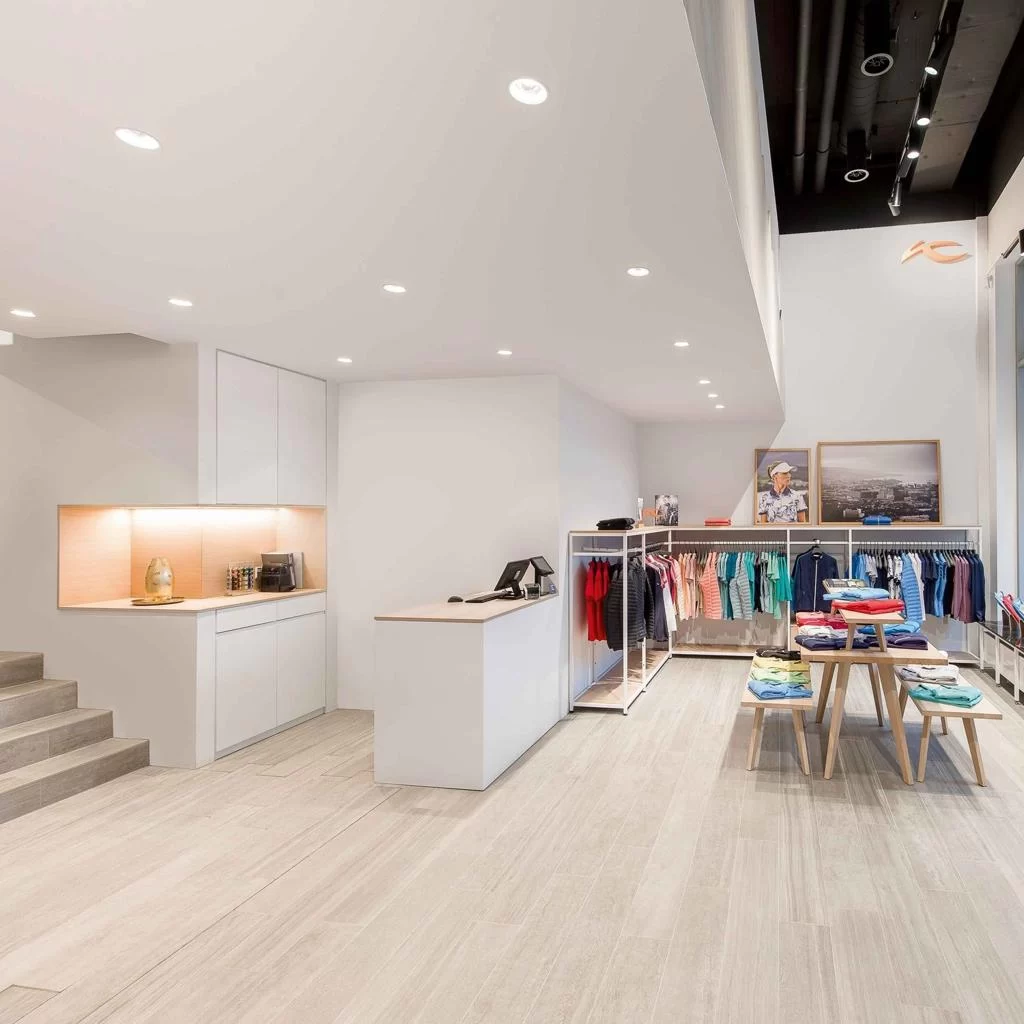
Start by understanding where the LED downlights will be installed.
Think about the room size, ceiling height, fixture spacing, and lighting purpose.
For general lighting, a wider beam angle may provide better coverage. For accent lighting, a narrower beam angle can help highlight specific areas.
Therefore, the application should always come first.
2. Choose the Right Brightness
When comparing LED downlights, do not look at wattage alone.
Instead, check lumens.
Lumens show the amount of light produced by a fixture, while watts show its power consumption.
A good commercial LED downlight should provide enough light while using energy efficiently.
For this reason, compare lumens, wattage, and lumens per watt when evaluating different products.
3. Choose the Correct Beam Angle
Beam angle controls how widely light spreads.
A narrow beam angle creates focused light. It is useful for accent lighting and product displays.
A medium beam angle offers a balance between focused and general lighting.
A wide beam angle covers a larger area. It can work well in offices, corridors, shops, and other general lighting applications.
The best beam angle depends on the ceiling height, fixture spacing, room size, and purpose.
For more information, see our guide to LED downlight beam angles.
4. Select the Right Color Temperature
Color temperature is measured in Kelvin (K).
Common options include:
- 3000K: Warm and comfortable
- 4000K: Neutral and balanced
- 5000K–6000K: Cool and bright-looking
The best choice depends on the space.
For example, 3000K can work well in hotels and restaurants. Meanwhile, 4000K is often suitable for offices, retail stores, and commercial areas.
Therefore, choose the color temperature based on the function and atmosphere you want to create.
5. Check CRI
CRI, or Color Rendering Index, describes how accurately a light source shows colors.
Good color rendering can be important in retail stores, hotels, restaurants, galleries, and other commercial spaces.
For example, clothing stores need customers to see product colors clearly.
Therefore, always check the CRI specification when selecting an LED downlight for projects where color quality matters.
6. Pay Attention to Glare
Glare can reduce visual comfort.
This is especially important in offices, hotels, shops, and other areas where people spend a lot of time.
A suitable LED downlight should provide good light distribution without creating excessive glare.
The fixture design, light output, beam angle, and installation height can all affect glare.
For some commercial projects, UGR may also be an important specification.
7. Choose a Reliable LED Driver
The LED driver is an important part of the fixture.
It controls the electrical power supplied to the LED and can affect stability and reliability.
Before placing a large order, ask the supplier about:
- Driver brand
- Input voltage
- Power factor
- Dimming options
- Protection functions
- Warranty
A reliable driver can help improve the long-term performance of commercial LED lighting.
8. Check Heat Dissipation
LEDs produce heat during operation.
Good thermal management can help maintain stable performance and extend product life.
Many LED downlights use aluminum housings or heat sinks to help move heat away from the LED module.
Therefore, do not judge a fixture only by its appearance. Ask about its thermal design and materials.
9. Check Installation Requirements
Before ordering LED downlights, make sure the fixture matches the ceiling and installation conditions.
Check:
- Cut-out size
- Fixture diameter
- Installation depth
- Ceiling thickness
- Recessed or surface installation
- Driver installation
- Maintenance requirements
For example, an ultra-thin recessed LED downlight may be a better choice for a ceiling with limited installation space.
10. Consider Energy Efficiency and Lifetime
Commercial lighting can operate for many hours every day.
Therefore, energy efficiency and service life can have a major effect on long-term operating costs.
A good LED downlight should balance:
- Energy efficiency
- Light output
- Driver quality
- Thermal performance
- Service life
- Maintenance needs
The lowest purchase price is not always the lowest total cost.
11. Check Certifications and Warranty
Different markets may have different requirements.
Depending on the country and project, buyers may ask for certifications such as CE, RoHS, EMC, LVD, ETL, or UL.
Always confirm the required standards before placing an order.
In addition, check the product warranty and after-sales support.
A clear warranty can give project buyers more confidence when purchasing LED lighting in bulk.
12. Choose the Right LED Lighting Supplier
The supplier is just as important as the product.
Before working with an LED lighting manufacturer, consider:
- Product quality
- Production capacity
- Quality control
- OEM/ODM service
- Certifications
- Sample service
- Delivery time
- Warranty
- Technical support
For large commercial projects, stable quality and reliable delivery are especially important.
A low price is useful, but consistent quality can provide much better long-term value.
You can learn more about our commercial LED lighting solutions.
Commercial LED Downlight Buying Checklist
Before placing an order, check these key specifications:
| Item | What to Check |
|---|---|
| Wattage | Power consumption |
| Lumens | Light output |
| Beam Angle | Light distribution |
| CCT | Color temperature |
| CRI | Color quality |
| UGR | Glare performance |
| Driver | Quality and specifications |
| Dimming | Available control options |
| Cut-out | Installation size |
| Lifetime | Expected service life |
| Warranty | Product coverage |
| Certifications | Market requirements |
This checklist can make it easier to compare different LED downlight suppliers.
Common Mistakes to Avoid
When choosing LED downlights, avoid these common mistakes:
Choosing by wattage only:
Higher wattage does not always mean better lighting. Compare lumens and efficiency instead.
Ignoring beam angle:
The wrong beam angle can create dark areas or excessive brightness.
Using the same CCT everywhere:
Different spaces may need different color temperatures.
Ignoring the driver:
Driver quality can affect stability and product reliability.
Choosing only by price:
Consider energy use, maintenance, warranty, and product lifetime as well.
How to Choose the Right LED Downlight for Commercial Projects?
The process is simple.
First, understand the application.
Next, choose the required brightness and beam angle.
Then, select the right color temperature and CRI.
After that, check glare, driver quality, thermal design, and installation requirements.
Finally, compare the supplier’s quality, certifications, warranty, and total cost.
The best LED downlight is not always the cheapest one. It should provide the right light, reliable performance, and good long-term value.
Frequently Asked Questions
What is the best LED downlight for commercial projects?
There is no single best option. The right LED downlight depends on the application, ceiling height, brightness, beam angle, CCT, CRI, and installation requirements.
What beam angle is best for LED downlights?
It depends on the project. Narrow beams are suitable for accent lighting, while wider beams can provide better coverage for general lighting.
Is 3000K or 4000K better for commercial lighting?
Both can be useful. 3000K creates a warmer atmosphere, while 4000K provides a more neutral appearance.
What should I check before buying LED downlights in bulk?
Check lumens, wattage, efficiency, beam angle, CCT, CRI, driver quality, installation size, certifications, warranty, and supplier reliability.
Should I choose LED downlights based only on price?
No. Product quality, energy efficiency, service life, warranty, and supplier support are also important.
Conclusion
Choosing the right LED downlight for commercial projects requires more than comparing prices.
You should consider the application, brightness, beam angle, CCT, CRI, glare, driver, thermal design, installation, efficiency, and warranty.
At the same time, choosing a reliable LED lighting supplier can help ensure stable quality and long-term project performance.
Choose the right LED downlight. Get the right light. Build a better commercial space.