
What Are Networked Lighting Controls and Why Do LED Projects Need Them?

Networked lighting controls are becoming an important part of modern LED lighting projects. They connect lights, sensors, control devices, and software through a communication network.
Unlike a simple on/off switch, a networked system can control individual fixtures, zones, or an entire building. It can also collect lighting data and connect with other building systems.
The DesignLights Consortium (DLC) updated its Networked Lighting Controls Technical Requirements in 2026. The new NLC V5.2 requirements place more focus on system integration, configuration reporting, and lighting-to-HVAC integration.
For commercial buildings, offices, warehouses, retail stores, schools, and outdoor projects, networked controls can make LED lighting more flexible and easier to manage.
What Are Networked Lighting Controls?
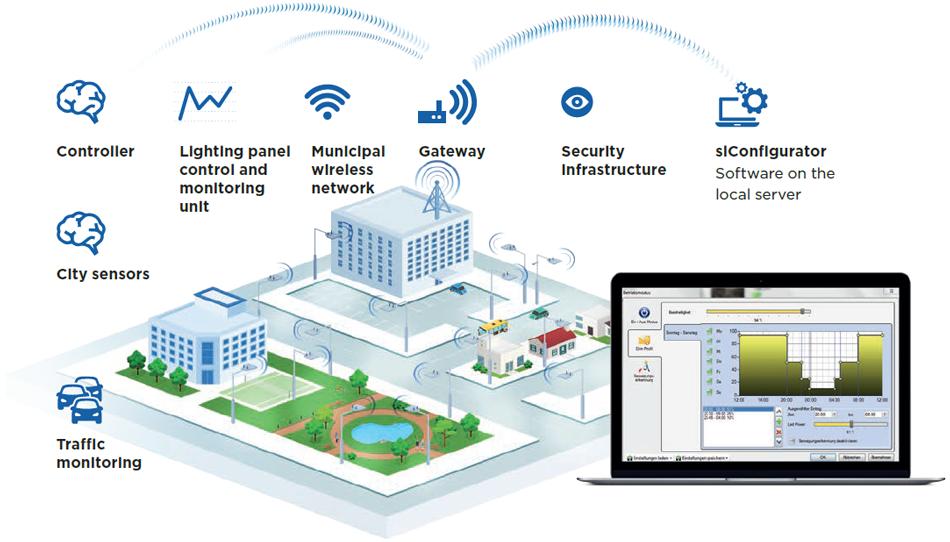
Networked lighting controls are connected systems that allow multiple lighting devices to communicate with each other.
A typical system may include:
- LED luminaires
- Occupancy sensors
- Daylight sensors
- Dimming controls
- Control panels
- Wireless or wired communication devices
- Central control software
- Energy monitoring tools
These devices work together through a network.
For example, an office may use occupancy sensors to detect when people enter a room. The system can then turn on the lights or adjust the light level.
If the room becomes empty, the system can reduce or turn off the lights.
A networked system can also divide a building into different zones. Each zone can have its own lighting schedule, brightness level, or control strategy.
The DLC defines NLC systems around capabilities such as individual addressability, continuous dimming, zoning, occupancy sensing, daylight harvesting, scheduling, scene control, and energy monitoring.
How Do Networked Lighting Controls Work?
A networked lighting control system usually has three basic layers.
1. Lighting Devices
The first layer includes LED fixtures and control components.
For example, a commercial project may use:
- LED panel lights
- LED downlights
- Linear lights
- High bay lights
- LED street lights
- LED floodlights
Each fixture may have a control module or connected driver.
2. Sensors and Control Devices
The second layer collects information from the space.
Common devices include:
- Occupancy sensors
- Motion sensors
- Daylight sensors
- Wall switches
- Touch panels
- Remote controls
These devices tell the system what is happening.
For example, a daylight sensor can detect natural light from windows. The system can then reduce LED output when enough daylight is available.
3. Software and Network
The third layer manages the whole system.
Depending on the project, users may control the lighting through:
- A wall panel
- A mobile app
- A computer
- A building management system
- Cloud-based software
This structure allows users to manage lighting from one place.
Why Do LED Projects Need Networked Lighting Controls?
LED lighting already provides high efficiency and long service life. However, efficient fixtures alone do not always provide the best possible energy performance.
Lights can still consume energy when rooms are empty.
They can also operate at full brightness when lower light levels are enough.
This is where networked lighting controls can add value.
Modern lighting control systems can adjust lighting based on occupancy, daylight, schedules, zones, and user needs. The IES notes that lighting control is increasingly moving from room-level systems toward luminaire-level, intelligent, networked platforms.
Here are several important benefits.
1. Networked Lighting Controls Can Reduce Energy Use
One major reason to use networked controls is energy management.
For example, an office does not need full lighting output when nobody is using the space.
A warehouse may need different light levels in different areas.
A parking area may also need different lighting levels during different periods.
With sensors and schedules, the system can automatically adjust lighting.
Common strategies include:
- Occupancy control
- Daylight harvesting
- Scheduled dimming
- High-end trim
- Task tuning
- Automatic shutoff
- Zone control
The actual energy savings depend on the building, lighting design, operating schedule, control strategy, and installation quality. Therefore, buyers should avoid using one fixed savings percentage for every project.
2. Better Control of Individual LED Fixtures
Traditional lighting systems often control several fixtures together.
Networked systems can provide much more control.
For example, a project may divide 100 LED fixtures into 10 zones.
Each zone can have different settings.
A meeting room can use a different schedule from an open office. A warehouse aisle can also operate differently from a loading area.
Some systems can address individual fixtures. This gives project teams more flexibility during operation and future changes.
3. Easier Lighting Management
Large buildings can have hundreds or thousands of LED fixtures.
Checking every fixture manually is not practical.
A networked system can provide centralized control.
Facility managers can use software to:
- Check lighting status
- Adjust schedules
- Change brightness
- Create lighting scenes
- Monitor energy data
- Manage zones
- Identify system issues
This can reduce manual work.
It can also make future changes easier.
4. Networked Lighting Controls Can Support Building Integration
Modern buildings often have multiple connected systems.
Lighting can work with:
- HVAC
- Building management systems
- Window shades
- Security systems
- Access control
- Energy management systems
This is an important development in commercial lighting.
The DLC’s 2026 NLC V5.2 requirements specifically recognize opportunities for lighting-to-HVAC integration through thermostat-enabled systems.
For example, an occupancy sensor may detect that a meeting room is empty.
The lighting system can reduce the light level.
If the same occupancy information is shared with the HVAC system, the building may also adjust heating or cooling for that space.
The exact functions depend on the control system and building integration.
5. Better Data for Facility Management
A networked lighting system can do more than turn lights on and off.
It can also collect useful information.
Depending on the system, data may include:
- Energy consumption
- Lighting status
- Occupancy information
- Operating schedules
- System faults
- Fixture activity
Facility managers can use this information to understand how spaces are being used.
The IES also highlights centralized lighting data as a potential tool for energy analysis, space utilization, maintenance, and other facility management tasks.
This makes lighting part of a broader building data system.
Wired vs. Wireless Networked Lighting Controls
There are two common approaches to connected lighting: wired and wireless.
| Feature | Wired Controls | Wireless Controls |
|---|---|---|
| Communication | Physical cables | Wireless connection |
| Installation | More cabling required | Less control wiring |
| New construction | Often suitable | Suitable |
| Retrofit projects | May require more work | Often flexible |
| Scalability | Good | Good |
| Maintenance | Depends on system | Depends on network |
| Initial design | Requires cable planning | Requires wireless planning |
Neither option is suitable for every project.
The right choice depends on the building structure, project size, installation conditions, communication protocol, cybersecurity requirements, and future expansion plans.
What Communication Protocols Are Used?
Networked lighting controls can use different communication technologies.
Common examples include:
- DALI
- DALI-2
- DALI+
- Bluetooth
- Zigbee
- Ethernet
- BACnet
- Other proprietary or open communication systems
The best option depends on the project requirements.
For a commercial project, buyers should check whether the control system can communicate with other systems that the building already uses.
Interoperability is important.
A lighting system should not only work today. It should also be practical to maintain and expand later.
What Should Buyers Check Before Choosing Networked Lighting Controls?
Choosing the right system requires more than checking the control method.
Here are several important points.
1. Check Compatibility
Make sure the controls work with the selected LED drivers and luminaires.
Ask the supplier for a compatibility list when necessary.
2. Check Dimming Performance
Confirm the required dimming range.
Also check for:
- Flicker
- Minimum dimming level
- Smooth dimming
- Driver compatibility
3. Check Sensor Functions
Ask what sensors are supported.
For example:
- Occupancy sensing
- Daylight sensing
- Motion detection
- Temperature sensing
4. Check Communication
Understand how the devices communicate.
Ask whether the system uses wired, wireless, or hybrid communication.
Also check whether it supports integration with other building systems.
5. Check Cybersecurity
Connected lighting systems can become part of a building network.
Therefore, cybersecurity should not be ignored.
The DLC’s NLC program includes verified information related to interoperability, cybersecurity, and data access for qualified systems.
6. Check Software and User Experience
A technically advanced system is not useful if it is difficult to operate.
Ask for a software demonstration.
Check whether users can easily:
- Add fixtures
- Create zones
- Change schedules
- Adjust lighting
- View data
- Troubleshoot problems
7. Check Future Expansion
The project may grow later.
Therefore, ask whether the system can support additional fixtures, sensors, zones, or buildings.
This is especially important for large commercial projects.
Are Networked Lighting Controls Suitable for Retrofit Projects?
Yes. Networked lighting controls can be useful for LED retrofit projects.
A typical retrofit may replace old fluorescent fixtures with LED fixtures.
However, simply replacing the fixtures does not always maximize the value of the project.
Adding sensors and controls can provide another layer of energy management.
Wireless systems can also reduce the need for new control wiring in some retrofit situations.
However, every building is different.
Before choosing a system, buyers should check the existing electrical infrastructure, ceiling structure, network environment, and installation conditions.
Networked Lighting Controls for Different LED Projects
Different applications need different control strategies.
Offices
Useful features may include:
- Occupancy sensing
- Daylight harvesting
- Dimming
- Personal control
- Scheduling
Warehouses
Useful features may include:
- Occupancy sensing
- Zone control
- High-bay dimming
- Scheduling
- Energy monitoring
Retail Stores
Retail projects may need:
- Scene control
- Dimming
- Scheduling
- Zone control
- Flexible lighting adjustments
Schools
Schools may benefit from:
- Occupancy sensing
- Daylight control
- Scheduling
- Dimming
- Central management
Outdoor and Street Lighting
Networked controls can also support outdoor applications.
Possible functions include:
- Individual addressability
- Scheduling
- Dimming
- Traffic or occupancy sensing
- Energy monitoring
The DLC’s current NLC requirements include indoor and outdoor applications such as streetlight and roadway systems.
Are Networked Lighting Controls Worth the Investment?
The answer depends on the project.
For a small room with only a few fixtures, a simple control system may be enough.
For a large commercial building, the situation can be different.
A networked system may provide additional value through:
- Energy management
- Centralized control
- Flexible zoning
- Data collection
- Maintenance support
- Building integration
- Future expansion
Therefore, buyers should look beyond the initial equipment price.
Consider the total cost of ownership.
This includes:
- Hardware
- Installation
- Commissioning
- Software
- Maintenance
- Training
- Future expansion
A lower purchase price does not always mean a lower long-term cost.
What Should LED Lighting Suppliers Provide?
For B2B LED projects, the lighting supplier should understand more than the LED fixture itself.
A professional supplier should be able to provide clear information about:
- LED specifications
- Driver specifications
- Dimming options
- Control compatibility
- Sensor options
- Communication protocols
- Installation requirements
- Testing and certification
- Warranty
- Technical support
If a project requires networked controls, discuss the control system before finalizing the LED fixture specifications.
This can prevent compatibility problems later.
Networked Lighting Controls: Buyer Checklist
Before selecting a system, ask these questions:
- Can the system control individual fixtures or zones?
- Does it support continuous dimming?
- Does it support occupancy sensing?
- Does it support daylight harvesting?
- Can it create lighting schedules?
- Can it monitor energy use?
- Does it support wired or wireless communication?
- Can it integrate with HVAC or a building management system?
- Is the system compatible with the selected LED drivers?
- Is the software easy to use?
- Can the system be expanded later?
- What technical support does the supplier provide?
- What warranty is included?
A clear checklist can help buyers compare different systems more effectively.
Conclusion: Why Networked Lighting Controls Matter
Networked lighting controls are changing the role of LED lighting in commercial buildings.
LED fixtures provide efficient light. Controls determine when, where, and how much light is used.
With connected controls, lighting can become more flexible, measurable, and easier to manage.
Modern systems can support occupancy sensing, dimming, daylight control, scheduling, energy monitoring, and building integration.
At the same time, buyers should evaluate compatibility, communication, cybersecurity, software, installation, and total cost before choosing a system.
For LED manufacturers, distributors, contractors, and project buyers, understanding networked lighting controls is becoming increasingly important as commercial lighting moves toward connected building systems.
If you are sourcing LED lighting for a commercial project, choosing compatible fixtures and control systems at the beginning can help reduce technical problems and simplify future operation.