
What Is DALI+ and Why Is Wireless Lighting Control Growing?

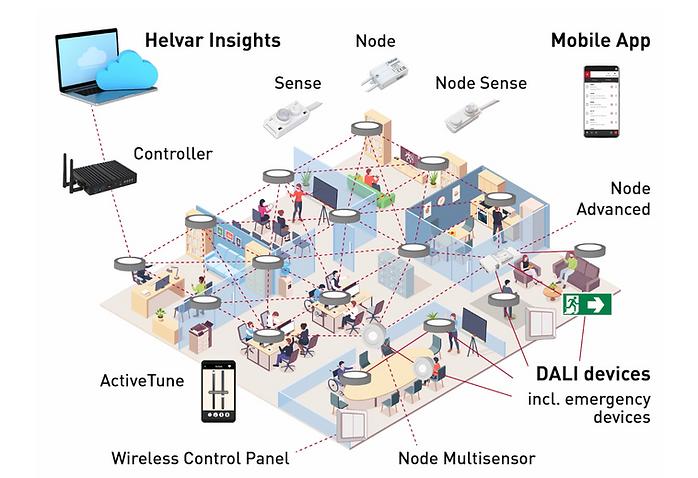
DALI+ wireless lighting is becoming an important topic in commercial lighting and smart building projects. As more buildings use connected systems, lighting control is moving beyond simple on and off functions.
Modern lighting systems need more flexibility. They may need dimming, zoning, occupancy sensing, energy monitoring, and building management integration. At the same time, many projects want to reduce wiring work.
This is where DALI+ can play a role.
DALI+ extends the DALI lighting control ecosystem to IP-based networks. Its first standardized wireless implementation uses Thread as the communication carrier. This approach combines lighting-specific DALI functions with wireless networking.
But what exactly is DALI+? And why is wireless lighting control growing?
What Is DALI+?
DALI+ is an extension of the DALI lighting control ecosystem. It allows DALI commands to travel over IP-based and wireless networks.
Traditional DALI uses a dedicated two-wire bus to connect lighting control devices. DALI+ can use different IP-based transport options, including wireless communication.
The first standardized DALI+ wireless implementation uses Thread, a low-power wireless mesh networking protocol.
This means DALI+ can bring familiar DALI lighting functions into a more flexible network environment.
For example, a DALI+ system can support:
- LED dimming
- Lighting scenes
- Individual device control
- Group control
- Occupancy sensing
- Energy and diagnostic data
- Lighting system monitoring
- Integration with building systems
The DALI Alliance describes DALI+ as a way to extend DALI into wired, wireless, and IP-based systems.
How Does DALI+ Work?
The basic idea is simple.
A lighting control command needs to move from a controller to a lighting device. In a traditional DALI system, this communication normally travels through the DALI bus.
With DALI+, DALI commands can travel through an IP-based network.
For wireless applications, Thread can provide the wireless communication layer.
A simplified system may look like this:
Lighting controller → IP network → Thread wireless mesh → DALI+ LED devices
This architecture can reduce the need for dedicated control wiring in some projects.
It can also make it easier to connect lighting with other digital building systems.
However, the exact system architecture depends on the project. Wired DALI, DALI+, gateways, and other network technologies can also work together.
Why Is Wireless Lighting Control Growing?
There are several reasons why wireless lighting control is gaining attention.
1. Retrofit Projects Need More Flexibility
Many commercial buildings already have lighting installed.
Adding new control cables can be difficult. It may require opening ceilings, modifying walls, or changing existing electrical routes.
Wireless systems can reduce some of this installation work.
For example, a retrofit project may add:
- Occupancy sensors
- Wireless switches
- Dimming controls
- Smart LED fixtures
- Central lighting management
without completely rebuilding the existing control infrastructure.
As a result, wireless solutions can be attractive for offices, retail stores, hotels, schools, and other existing buildings.
2. Smart Buildings Need Connected Systems
Modern buildings increasingly connect lighting, HVAC, sensors, energy systems, and building management platforms.
Lighting is no longer an isolated system.
For example, an occupancy sensor can provide information about whether a space is being used. The lighting system can use this information to reduce unnecessary lighting.
The same occupancy data may also support HVAC control.
Therefore, connected lighting can become part of a wider smart building system.
3. Wireless Systems Can Simplify Installation
Traditional control wiring can increase installation complexity.
Wireless communication can provide more flexibility when installing or changing lighting zones.
For example, a commercial space may change its layout after renovation. A wireless control system can make it easier to change control groups without installing the same amount of new wiring.
However, wireless does not always mean installation is simple. Network planning, device compatibility, commissioning, and signal performance still need attention.
4. Lighting Needs More Data
Modern LED systems can do more than provide light.
Connected lighting devices can provide useful information about:
- Energy consumption
- Operating status
- Device condition
- Occupancy
- Lighting levels
- System faults
This information can help facility managers understand how a building is using energy.
DALI-based systems are designed specifically for lighting. Therefore, lighting control and lighting data can work together within the same ecosystem.
DALI+ vs Traditional DALI
Both systems are based on the DALI lighting control ecosystem. The main difference is how communication is transported.
| Feature | Traditional DALI | DALI+ |
|---|---|---|
| Communication | Dedicated DALI bus | IP-based transport |
| Wireless option | Not native to traditional bus | Supported |
| Thread | No | Yes, in the initial standardized wireless implementation |
| Dimming | Yes | Yes |
| Lighting control | Yes | Yes |
| Lighting data | Yes | Yes |
| Building integration | Possible | Designed for IP-based environments |
| Retrofit flexibility | Depends on wiring | Can offer more wireless options |
| Network architecture | DALI bus | IP-based and/or wireless |
This does not mean DALI+ replaces traditional DALI.
In fact, DALI+ can help bridge wired and wireless lighting control.
A project may use traditional wired DALI in some areas and DALI+ wireless technology in other areas.
This hybrid approach can be useful for renovations and phased upgrades.
What Is DALI+ With Thread?
DALI+ with Thread combines DALI lighting control with Thread wireless networking.
Thread is a low-power wireless mesh technology designed for connected devices.
A mesh network can allow devices to communicate through multiple network paths. This can provide flexibility when devices are distributed throughout a building.
For lighting projects, the important point is that DALI remains focused on lighting control while Thread provides the wireless communication layer.
This combination can support modern applications such as:
- Wireless LED lighting control
- Smart commercial lighting
- Connected sensors
- Building automation
- Lighting data collection
- Retrofit lighting systems
DALI+ with Thread is therefore an important development for wireless lighting control.
What Are the Benefits of DALI+ Wireless Lighting?
There are several potential benefits for commercial lighting projects.
Flexible Installation
Wireless communication can reduce the amount of new control wiring required in some applications.
This can be useful during renovations.
Easier Zoning
Commercial spaces often need different lighting zones.
For example, an office may have separate zones for meeting rooms, open work areas, corridors, and reception areas.
Connected control systems can make these zones easier to configure and manage.
Better Building Integration
IP-based systems can make it easier to connect lighting with other building technologies.
For example:
Lighting + Sensors + HVAC + Building Management System
This can help create a more connected building environment.
More Lighting Data
Connected lighting systems can provide useful operating data.
Facility managers can use this information to monitor lighting performance and identify potential problems.
Support for Energy Management
Lighting controls can help reduce unnecessary lighting.
For example, occupancy-based control can turn lights down or off when a space is not being used.
However, actual energy savings depend on the building, control strategy, operating schedule, and installation quality.
Is DALI+ Suitable for Every Project?
Not necessarily.
The right lighting control system depends on the project requirements.
Before selecting DALI+, buyers should consider:
Project Type
A new commercial building may have different requirements from an existing office retrofit.
Wiring Conditions
Check the existing electrical and control infrastructure before selecting a wireless solution.
Network Requirements
The project team should understand how the wireless network will communicate with lighting devices and other systems.
Device Compatibility
Check whether LED drivers, sensors, controllers, gateways, and other devices are compatible with the required DALI or DALI+ specifications.
Certification
Buyers should check product certification and compatibility information rather than assuming that products using the DALI name will automatically work together.
Commissioning
Smart lighting systems need proper commissioning.
A good system should be configured, tested, and documented before handover.
What Should LED Buyers Ask Suppliers?
If you are sourcing LED lighting with smart controls, do not only ask for the LED fixture price.
Ask the supplier:
- Does the LED driver support DALI or DALI-2?
- Is the product compatible with the required DALI+ system?
- Does the product support wireless communication?
- Which wireless technology is used?
- Is Thread supported where required?
- Are the control devices certified?
- Can the system support dimming and zoning?
- Can it provide energy or diagnostic data?
- Can it integrate with the project’s building management system?
- What testing and commissioning support is available?
These questions can help reduce compatibility risks during a project.
DALI+ and the Future of Wireless Lighting
The lighting industry is moving toward more connected systems.
At Light + Building 2026, the DALI Alliance highlighted strong interest in DALI+ with Thread and described wireless, interoperable, and IP-based lighting control as an important direction for the industry.
The trend is also visible in retrofit projects.
Existing buildings need flexible ways to upgrade lighting without completely replacing their infrastructure. Wireless control can provide another option.
At the same time, smart buildings need lighting systems that can communicate with other building technologies.
This creates opportunities for DALI+, wireless LED lighting, sensors, and networked lighting controls.
The future is unlikely to be only wired or only wireless.
Instead, many commercial projects may combine wired and wireless technologies based on the building’s requirements.
DALI+ Wireless Lighting: What Buyers Should Remember
DALI+ wireless lighting brings DALI lighting control into IP-based and wireless network environments.
Its initial standardized wireless implementation uses Thread. This can provide a flexible option for smart lighting and retrofit projects.
The main advantages include:
- More flexible installation
- Wireless lighting control
- Easier system expansion
- Better lighting data
- Smart building integration
- Support for connected LED systems
- More options for retrofit projects
However, buyers should not select a control system based on wireless technology alone.
Product compatibility, certification, network design, driver quality, commissioning, and long-term support are equally important.
For LED lighting projects, the best solution should match the actual building and control requirements.
FAQ About DALI+ Wireless Lighting
What is DALI+?
DALI+ is an extension of the DALI lighting control ecosystem that allows DALI commands to use IP-based and wireless communication networks.
Is DALI+ wireless?
DALI+ can support wireless and wired IP-based transport options. The first standardized wireless implementation uses Thread.
What is DALI+ with Thread?
DALI+ with Thread combines DALI lighting control with Thread wireless mesh networking. It can provide wireless communication for connected lighting systems.
Is DALI+ the same as DALI-2?
No. DALI+ is an extension of the DALI ecosystem for IP-based and wireless communication. DALI-2 is a certification program that improves interoperability and adds features to the DALI ecosystem.
Can DALI+ be used for retrofit projects?
Yes. DALI+ can be considered for some retrofit applications because wireless communication can provide additional installation flexibility. However, the existing building, wiring, network, and product compatibility must be evaluated first.
Why is wireless lighting control growing?
Wireless lighting control is gaining attention because it can offer installation flexibility, support retrofit projects, simplify changes to lighting zones, and help connect lighting with smart building systems.
Conclusion
DALI+ wireless lighting is an important development in connected commercial lighting.
It combines the lighting-specific functions of DALI with IP-based and wireless communication options. With DALI+ with Thread, lighting manufacturers and system integrators have another way to build flexible wireless lighting systems.
For LED buyers, the key is not simply choosing wireless technology.
Instead, look at the complete system. Check the LED driver, control protocol, certification, compatibility, network requirements, sensors, commissioning, and long-term support.
As commercial buildings become more connected, flexible lighting control will become increasingly important.
For LED manufacturers, distributors, and project buyers, understanding technologies such as DALI+ can help make better decisions when planning the next generation of smart lighting systems.