
8000W Outdoor Solar Street Light for Road and Area Lighting

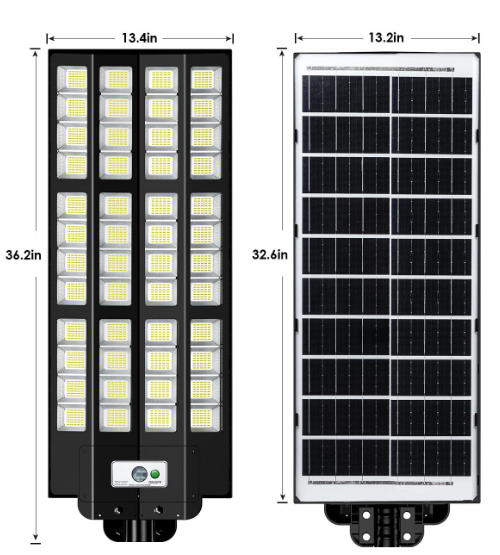
PRODUCT PARAMETERS
Description
FAQs
Request A Quote
Description
8000W Outdoor Solar Street Light for Outdoor Lighting Projects
The 8000W Outdoor Solar Street Light targets buyers looking for solar-powered lighting solutions for outdoor spaces, including roads, parking areas and commercial properties. By using solar energy as its power source, a solar street light can reduce dependence on grid electricity where the site and system design support standalone operation.
Moreover, solar lighting can simplify power planning in locations where extending electrical infrastructure presents practical challenges. However, buyers should evaluate the actual solar panel capacity, battery energy, LED power consumption and lighting performance before selecting a model.
For lighting distributors, contractors and project buyers, JinBiao Lighting can discuss product requirements, technical specifications and sourcing options based on the intended installation.
Solar Power Supports Outdoor Lighting Without Continuous Grid Supply
Solar street lighting combines solar energy generation, battery storage and LED illumination. During the day, the solar panel converts sunlight into electrical energy. The battery then stores energy for use after sunset, while the control system manages the light’s operation.
Consequently, a correctly designed solar lighting system can reduce reliance on grid electricity. However, actual performance depends on sunlight exposure, panel capacity, battery capacity, lighting power, operating settings and local weather conditions.
Before choosing a system, buyers should assess the site’s solar conditions and the required lighting schedule. This approach helps match the product to the project’s real operating needs.
Solar Street Lights Serve Roads, Parking Areas and Public Spaces
Outdoor solar street lights can support multiple applications, provided that the selected model meets the project’s illumination and environmental requirements.
Road and Street Lighting
Solar street lights can support road and street lighting in suitable locations. However, buyers should review road width, pole height, spacing, mounting position and required illumination levels before specifying the product.
Parking Lot Lighting
Parking areas need suitable visibility for vehicles and pedestrians. Therefore, project planners should evaluate the light distribution, mounting layout and operating schedule instead of relying only on a product’s advertised wattage.
Gardens and Residential Communities
Solar lighting can illuminate pathways, entrances, gardens and shared outdoor areas. In addition, standalone systems may simplify installation where grid wiring would require additional work.
Commercial and Public Projects
Commercial properties, outdoor facilities and selected public spaces may also benefit from solar lighting. Nevertheless, the buyer should confirm the applicable project standards and environmental requirements before ordering.
Actual Power and Brightness Determine Lighting Performance
A product title alone cannot establish a solar street light’s real lighting performance. Therefore, buyers should verify the rated electrical input power and measured luminous output from the product datasheet.
In particular, check the following details:
- Rated LED power: Confirm the actual operating power of the LED system.
- Luminous flux: Check the measured lumen output and the conditions used for testing.
- Light distribution: Review the beam pattern and photometric data.
- Solar panel power: Confirm the panel’s rated output.
- Battery energy: Request the battery voltage and capacity in watt-hours.
- Operating schedule: Confirm how the controller manages brightness and nighttime operation.
These specifications provide a more reliable basis for comparing products than a headline wattage alone.
Battery Capacity and Solar Panel Output Affect Nighttime Operation
Battery storage and solar charging capacity determine how much energy a solar street light can collect and use. Therefore, buyers should evaluate these components together rather than considering either one in isolation.
First, confirm the solar panel’s rated power and the expected solar conditions at the installation site. Next, check the battery’s rated energy and the system’s charging and discharging limits. Then, review the lighting schedule and any automatic dimming functions.
Additionally, ask the supplier to explain how the system operates during cloudy weather and whether the design provides the required backup duration. Actual nighttime runtime depends on the complete system configuration and environmental conditions.
Technical Specifications Require Confirmation Before Ordering
The product title identifies an 8000W outdoor solar street light. However, the title alone does not verify its electrical rating, battery configuration or other technical characteristics.
Use the following table to organize the specifications required for product evaluation.
| Specification | Product Information |
|---|---|
| Product Type | Outdoor Solar Street Light |
| Advertised Power | 8000W in the product title; verify rated input power |
| Light Source | LED, confirm exact model |
| Luminous Flux | Confirm with product datasheet |
| Solar Panel Power | Confirm with product datasheet |
| Battery Chemistry | Confirm according to exact model |
| Battery Capacity | Confirm rated voltage and Wh |
| Charging Controller | Confirm according to exact model |
| Control Method | Confirm available functions |
| Operating Schedule | Confirm according to exact model |
| Motion Sensor | Confirm according to exact model |
| Color Temperature | Confirm according to exact model |
| Beam Angle and Light Distribution | Confirm with photometric data |
| Waterproof Rating | Confirm through product documentation |
| Housing Material | Confirm according to exact model |
| Mounting Method | Confirm pole and bracket requirements |
| Recommended Installation Height | Confirm through lighting design |
| Certifications | Confirm documents for the destination market |
| OEM/ODM | Discuss according to project requirements |
Outdoor Installation Requires Suitable Weather Protection
Outdoor lighting equipment must withstand the environmental conditions at the installation site. Therefore, buyers should check the product’s documented ingress protection rating, material specifications and installation instructions.
For example, a project in a coastal area may require particular attention to corrosion resistance. Meanwhile, locations with strong winds or heavy rainfall may need additional consideration of mounting stability and weather protection.
In addition, verify the permitted operating temperature, cable connections, mounting hardware and maintenance requirements. Do not assume a particular IP rating or weather resistance level without documentation for the exact model.
OEM and ODM Support for Solar Lighting Projects
Lighting distributors and project buyers often need products that match local market requirements. Consequently, OEM and ODM discussions should begin with the target application, technical requirements and intended sales market.
JinBiao Lighting can discuss requirements such as:
- Product configuration
- Lighting specifications
- Packaging and labeling
- Brand presentation
- Project-specific requirements
- Quality inspection arrangements
- Export and shipment support
The available options depend on the product model and production requirements. Share your project details so the team can confirm the feasible configuration and provide relevant product information.
Quality Control Helps Buyers Evaluate Solar Lighting Products
A solar street light combines several components, so product evaluation should cover the complete system. In addition to checking the LED fixture, buyers should review the solar panel, battery, controller, wiring and mounting components.
A practical quality-control process can include component inspection, electrical checks, charging and discharging verification, lighting operation tests and final product inspection. Furthermore, the supplier should provide technical documents that match the model under consideration.
Before placing a bulk order, buyers should confirm the inspection criteria, packaging requirements and agreed product specifications. This process supports clearer communication between the supplier and the purchasing team.
How to Select an Outdoor Solar Street Light
Selecting a suitable solar street light begins with the site’s lighting requirements. First, identify the area to illuminate and determine the required light distribution and operating schedule.
Next, assess the available sunlight and confirm the solar panel and battery specifications. Then, check the installation height, pole compatibility, environmental protection and controller functions.
For road and commercial projects, request photometric data and verify that the proposed layout meets the project’s illumination requirements. Finally, confirm the product’s technical datasheet, certifications and quotation before placing the order.
Frequently Asked Questions
Is the product really rated at 8000W?
The Alibaba product title includes 8000W, but the title alone does not verify the actual rated input power. Ask for the product datasheet and confirm the electrical rating before comparing performance or preparing a project specification.
How long can a solar street light operate at night?
Operating time depends on battery energy, actual lighting power, operating modes, charging conditions and local weather. Confirm the tested runtime for the exact model and the operating conditions used during testing.
Can an outdoor solar street light work during cloudy weather?
A solar street light can use stored battery energy when sunlight is limited. However, the available operating time depends on the energy stored in the battery and the system’s energy consumption. Ask the supplier about the expected operating schedule under local solar conditions.
Is this product waterproof?
The exact waterproof rating requires confirmation from the product specification or test documentation. Buyers should verify the rating and its applicability to the complete product before outdoor installation.
Does JinBiao Lighting support OEM and ODM orders?
JinBiao Lighting can discuss OEM and ODM requirements based on the selected product, customization scope and project specifications.
Request a Solar Street Light Quotation
Looking for an 8000W Outdoor Solar Street Light for a distributor catalog, commercial installation or outdoor lighting project?
Send JinBiao Lighting your target application, installation location, required operating schedule and estimated order quantity. We can discuss the technical specifications, available configurations, customization requirements and quotation.
Contact JinBiao Lighting for product details, OEM/ODM options and a quotation.
FAQs
How do you ensure the heat resistance of your decorative lights?
For products like our Acrylic Flower series, we use UV-stabilized, high-grade acrylic and professional-grade LED chips with low thermal resistance. Our in-house SMT technology ensures stable current flow, preventing overheating and ensuring the material won't yellow or deform over time.
Do your solar products work in low-sunlight areas?
Our solar street lights feature high-efficiency monocrystalline panels and Intelligent Power Management (IPM), allowing them to remain functional for 3-5 rainy days.
What is the lead time for customized orders?
Standard products are usually in stock. For customized OEM orders (like specific PCBA designs), our lead time is typically 15-25 days, thanks to our fully automated production lines in Guangdong and Shanxi.
How do you handle shipping costs for 40ft containers?
We work with top-tier freight forwarders to lock in competitive rates. We provide a detailed Loading Plan to maximize container space (CBM optimization), saving you 5-10% on sea freight costs.
Is it possible to visit your factory virtually?
Absolutely. We offer Live Video Tours via WhatsApp or Zoom. You can see our SMT lines, die-casting centers, and aging test rooms in real-time to verify our scale and quality.
How do you handle warranty claims for international orders?
We operate on a "Replacement First" policy. If a product fails within the warranty period, we ship replacement parts or new units with your next shipment, or provide a credit note immediately—no need to ship bulky items back to China.